Share the page
Beacon Power Services: harnessing data to drive Africa’s energy transition
Published on
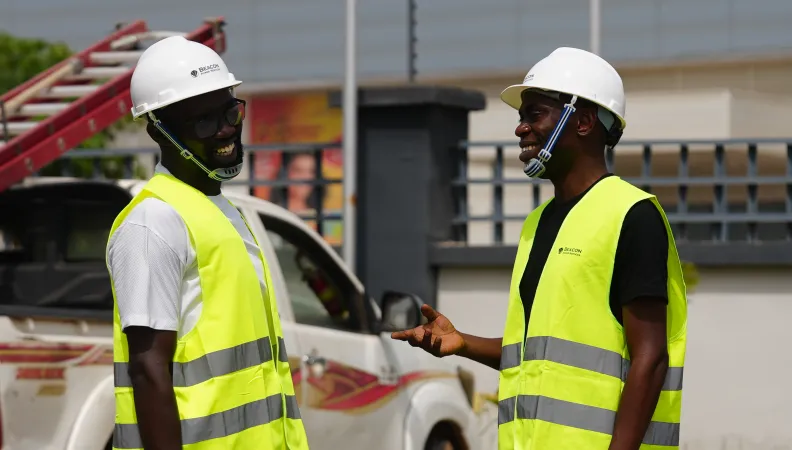
On a continent where power cuts are still a regular feature of the daily lives of households and businesses, a start-up intends to become a game-changer. Beacon Power Services (BPS), with the backing of Proparco, is developing AI-based digital solutions to help distributors reduce their losses, manage their networks more effectively and improve service quality. A report from Nigeria.
Standing outside his shop in Abuja, Ezekiel Ejeh observes fluctuations in power as one might check the weather. For this soft drinks vendor, electricity directly affects his revenue. His account illustrates a reality shared by many small Nigerian businesses: an electricity service that remains patchy, costly and unpredictable.
Structural losses that undermine the system
Aside from the very visible power cuts, the problem is also structural. Technical and commercial losses are weighing heavily on distribution companies. As Bim Adisa, founder and CEO of BPS explains, “In sub-Saharan Africa, losses on distribution networks average 23%. Operators are completely broke, heavily subsidised, and struggling to invest.” The company’s mission is both clear and clearly quantified: “Beacon Power Services aims to reduce these losses by 50% and increase distributors’ revenues by 30%.” And the initial results are tangible: “Our partners have already cut their losses by an average of 26% and increased their cumulative revenue by US$ 600 million.”
In many cases, operators simply lack visibility over their own network. “When there is an electricity supply, operators do not always know what is actually happening on the ground. Sometimes, for weeks on end, they are unaware that there is a fault at a particular substation.” Faced with this lack of visibility, BPS offers an approach based around digitalisation and smart grids: “Part of the solution involves setting up a smart grid that enables the network to be monitored remotely. We have digitised the system to ensure continuous meter readings.”
In Abuja, a network transitioning from ‘flying blind’ to real-time visibility
Abuja Electricity Distribution Company (AEDC) – one of the country’s largest operators – is among those being supported by BPS. Before this partnership, network management relied largely on analogue tools. As engineer Emmanuel Ogwuche, AEDC’s Director of Regulation and Efficiency, recalls: “Before BPS arrived, we were operating like an aeroplane flying between destinations without a radar system. We were working with a largely analogue maintenance system. We had no reliable data to guide our decisions and manage the network effectively.”
The integration of BPS’s digital solutions has been a game-changer. “BPS came in with a more effective approach to help us tackle these issues,” he adds. Today, teams have accurate, real-time visibility of incidents, unstable zones and abnormal losses. Interventions are faster, planning more detailed and communication with customers is more proactive. Similarly, BPS’s solutions enable predictive maintenance of network assets (e.g. transformers).
Technology designed in Africa – for Africa
BPS was born in Africa, for Africa. We don’t simply copy and paste solutions designed elsewhere. You can’t just take plug-and-play software and hope that it will work here.” In practice, this means a constant presence on the ground: “Every country, indeed every city, has its own dynamics and infrastructure realities based on consumer habits. We spend a great deal of time on the ground to understand these local challenges and design systems that are truly adapted to them.

In environments with ageing infrastructure and fragmented data, value lies not merely in adding equipment, but in smart use of existing data. In practical terms, this approach is embodied in three complementary building blocks. The first, CAIMS, carries out field mapping of the entire electricity network to create a digital twin of the network and its customers. Adora, an AI-based solution uses CAIMS to offer high-value-added services: real-time billing, outage management, predictive maintenance, etc. Finally, Xepp is an app that allows consumers to track their consumption, carry out daily transactions and subscribe to renewable energy offers (e.g. solar panels). So, in Abuja, BPS has deployed this range of solutions to prevent the loss of 78,000 MW of electricity due to power cuts, which translates into US$ 700 million in added value for the local economy and 31,000 tonnes of CO₂ avoided.
A pan-African ambition
For Bim Adisa, founder and CEO of BPS, the challenge goes beyond the Nigerian market. “For me, it’s all about development in Africa, a cause I’ve always been passionate about.” Proparco’s investment has accelerated this momentum. “When Proparco invested, BPS was operating in two countries. By the end of this month, we will be in eight countries across Africa. This has been a real turning point for us.” This expansion illustrates a clear goal: to make data a key driver in the modernisation of the continent’s energy infrastructure.
A transformation that can be measured on the ground
For distributors, reducing losses translates into immediate financial gains and enhanced investment capacity. For customers, it is measured in additional hours of electricity availability and greater predictability. Beacon Power Services’ growth embodies a new generation of African companies capable of designing technological solutions tailored to local realities. A model where innovation comes from the ground up, where data becomes a tool for energy sovereignty – and where African enterprise is emerging as a key driver of the continent’s transformation.
Discover our interview with Bim Adisa
Voices for Change - Bim Adisa, Beacon Power Services
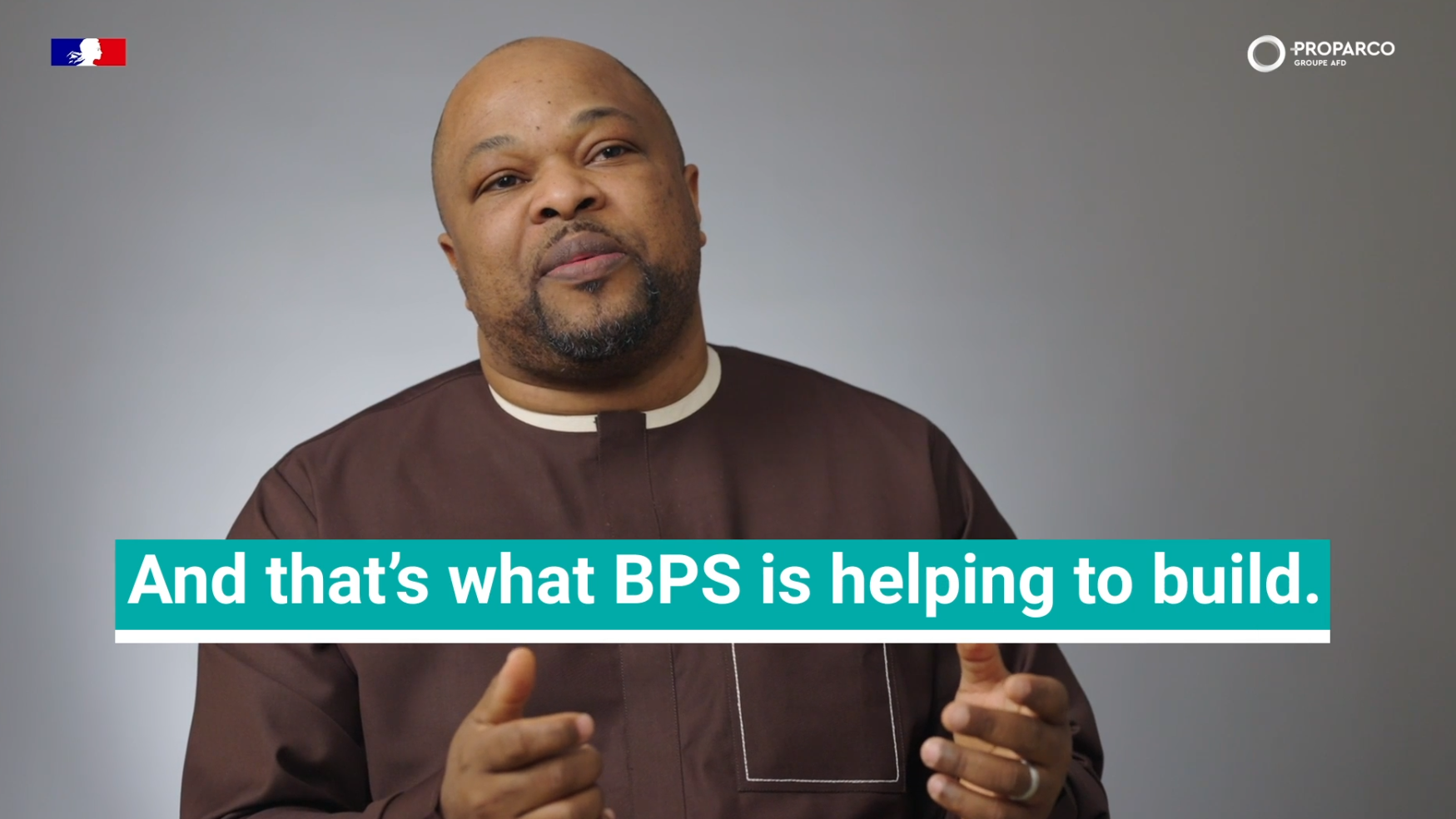
In this Voices for Change episode, Bim Adisa, CEO & Founder of Beacon Power Services (BPS), explains how smarter data and technology can transform electricity distribution across Sub-Saharan Africa.
Published on March 17, 2026
Key figures
- 50 million consumers and businesses
- 200 people employed
- 8 countries across Africa