Search results
Launching a New Global Industry Body that Convenes the Entire Spectrum of Investors to Promote Gender Lens Inv...
Some of the largest household names in the global investment industry today announced that they would be backing a new industry body set up to promote investment in women.
News
Published on

Proparco and National Bank of Iraq have signed a $10 Million Trade Finance Guarantee
Proparco has just granted a trade finance guarantee for $10 million to National Bank of Iraq (NBI). This project is the first collaboration between Proparco and NBI and will support local importers in...
News
Published on

In Ecuador, PROPARCO has signed two new projects in the agribusiness and telecoms sectors
By allocating a USD 15m loan to SONGA, a shrimp producer, and a USD 25m loan to Phoenix Tower International Ecuador (PTIE), a telecoms company, PROPARCO has reiterated its support to Ecuador’s private...
News
Published on

BANCO PROCREDIT
Banco ProCredit Ecuador is a financial institution which aims to focus its support on the country’s microenterprises and SMEs. It also conducts a training policy, which is offered to both its employee...
Project
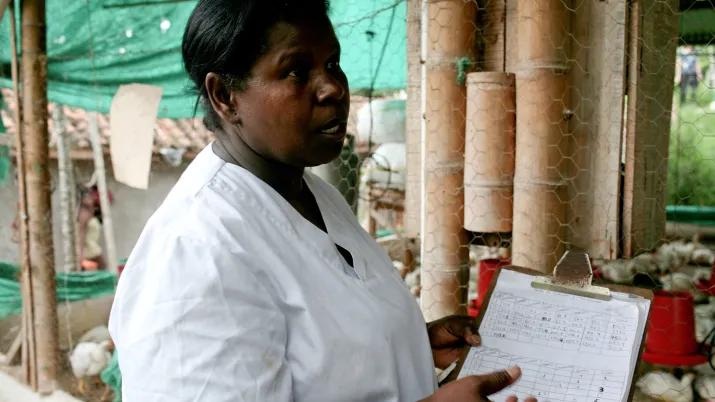
Proparco invests in Bank of Palestine to foster inclusive growth in Palestine
Bank of Palestine (BOP) and Proparco jointly announced today the signing of an agreement that will see FISEA (the AFD Group fund advised by Proparco), invest USD 12 million in Bank of Palestine throug...
News
Published on

IDB Invest, Proparco, FinDev Canada and Sofisa support SMEs in Brazil by facilitating access to financing
IDB Invest, a member of the IDB Group, has provided financing for US$200 million to Banco Sofisa S.A. (Sofisa) in Brazil, together with Proparco and FinDev Canada. The proceeds will contribute to incr...
News
Published on
Metier-led consortium invests US$36 million into AMN to expand coverage in remote rural Africa
A consortium led by Metier, an independent African private equity fund manager, has invested US$36 million into Africa Mobile Networks Ltd (“AMN”). The consortium includes CDC Group (the UK’s developm...
News
Published on

Proparco and Ecobank increase support for MSMEs in Ghana
Proparco and Ecobank Ghana, an affiliate of the Pan-African Banking Group, Ecobank Transnational Incorporated (ETI), have today signed a partnership agreement aimed at increasing access to finance for...
News
Published on

Proparco partners with impact manager INCOFIN IM to invest in the rural Indian economy
Proparco and Incofin IM announce the successful first closing of the Incofin India Progress Fund (IPF) with over EUR 50 million of commitments. The fund will make private equity investments in the Ind...
News
Published on

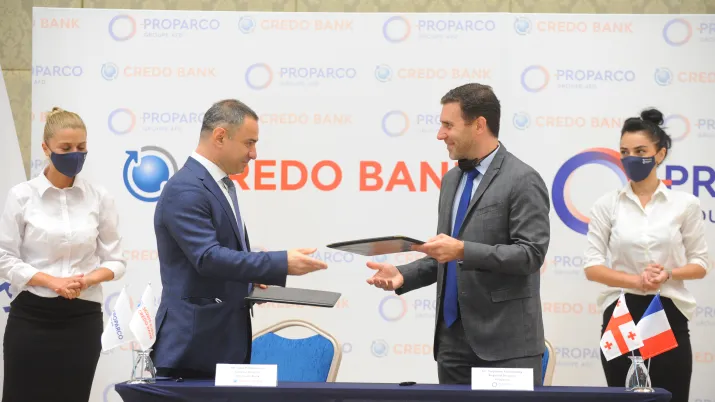
Proparco becomes the shareholder of Credo Bank
Proparco and Credo Bank signed an equity investment agreement based on which Proparco has become a new shareholder of the bank. The investment supports the acquisition of Finca Bank Georgia by Credo a...
News
Published on
Proparco and IFC to finance Kasada's first acquisition to support the hospitality sector in sub-saharan Africa
Kasada has secured a strategic partnership with the International Finance Corporation (IFC) to create a large hotel portfolio in Sub-Saharan Africa through a US$160 million debt facility, of which a U...
News
Published on

Proparco invests in ARAF, the first-of-its-kind equity fund to drive climate adaptation for smallholder farmer...
Proparco - through FISEA+, the AFD Group fund advised by Proparco – signed a USD 5 million investment in Acumen Resilient Agriculture Fund (ARAF). The fund invests in agri-startups in East and West Af...
News
Published on
EUR 50 million signed with ProCredit Bank for small and medium-sized enterprises and green projects in Serbia
Proparco has signed a new credit facility (EUR 50 million) with ProCredit Bank. This project will secure funding for the SME sector and green projects. For Proparco, this credit facility is its first...
News
Published on

Proparco supports the development of Leading Star, a responsible actor in Vietnam's garment industry commited ...
Through a $12 million loan, Proparco will support the growth of a job-creating company committed to the well-being of its employees, women empowerment as well as the sustainable use of resources.
News
Published on

BANCO REGIONAL
Banco Regional is specialized in financial services for agriculture and livestock farming and is Paraguay’s leading bank. Proparco’s support will allow it to finance agricultural and agro-industrial c...
Project

Proparco and FMO support Tiryaki Agro, Turkey's leading agribusiness
FMO and Proparco announced today a USD 82.5 mln syndicated facility to support FMO’s long-standing customer Tiryaki Agro, one of Turkey’s leading agricultural commodity traders and supply chain manage...
News
Published on

Proparco and EVNFinance will support projects with climate co-benefits in Vietnam
Through a $10 million loan, Proparco aims to help EVNFinance increase its support to renewable energy projects.
News
Published on

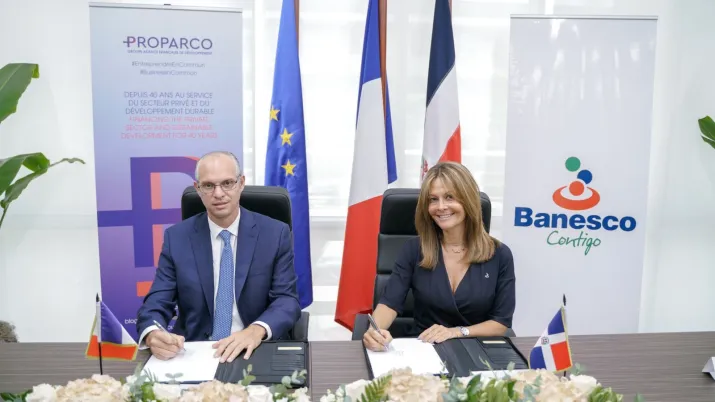
Proparco supports Banesco Dominican Republic in its SME financing activity
The 15 million dollar line of credit granted by the private sector subsidiary of the French Development Agency (AFD Group) will support the growth strategy of this bank committed to small businesses i...
News
Published on
Proparco supports Komida's mission to provide micro-loans to low income women in Indonesia
Proparco’s €7 million loan will support the microfinance institution’s growth and is expected to benefit more than 130,000 women.
News
Published on

Proparco participates in the first close of Amethis MENA Fund II
Amethis, an investment fund manager dedicated to the African continent, has announced the first closing of the Amethis MENA Fund II (AMF II) at EUR 85 million.
News
Published on