Share the page
Thanks to the Sonoco mill, Sierra Leone is investing in food security
Published on

In Freetown, a large industrial mill inaugurated in May 2026 is helping to ensure a sustainable supply of flour for Sierra Leone. This strategic project, which is headed up by Sonoco and its French partner Eurograin, and supported by Proparco, marks a key milestone on the path to national food sovereignty while promoting employment and new industrial opportunities. Here is an on-site report, a few weeks before the project’s launch.
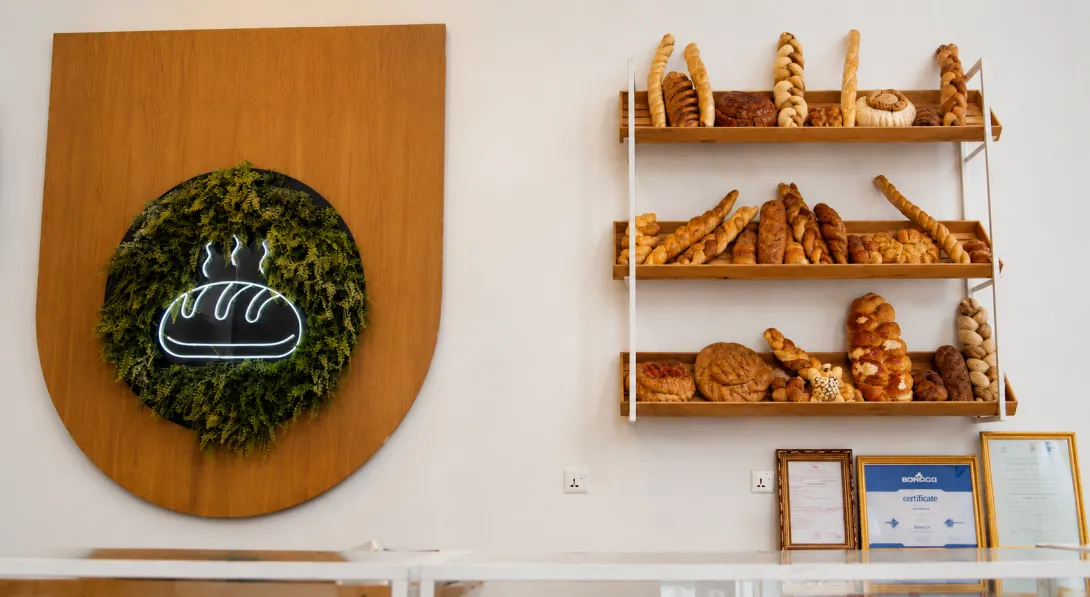
With his long nimble fingers and practised rhythm, Chernoh Saadu Jalloh lines up the delicious white loaves from his latest batch, which bear a striking resemblance to French baguettes. Using his traditional terracotta oven, this independent baker from a suburb of Freetown, Sierra Leone, turns out several hundred loaves of bread every day. Bread remains an essential staple in this English-speaking West African country, where two-thirds of the population still suffers from food insecurity. The supply of flour is therefore of vital strategic importance to Sierra Leone, which ranks 184th out of 193 on the United Nations Human Development Index.
Until now, flour has been imported directly from distant places such as the Middle East. This has resulted in very high transport costs, inferior nutritional quality and limited shelf life, not to mention the uncertainty over deliveries in the event of global geopolitical tensions – the current crisis in Iran providing a stark example.
It is against this backdrop that Sierra Leone is encouraging investment aimed at improving the country’s food security through local production or processing of staple foods, such as wheat flour.
I represent the bakers of this country – the men and women who get up very early in the morning to put bread on the table for every Sierra Leonean. Producing flour here is a really good thing: it will ensure that we have it when we need it, and will be a great help to bakers, not only in Freetown, but throughout the country.
As a tangible step on this path towards food self-sufficiency, in early spring of this year, Sonoco is busy putting the finishing touches to an enormous industrial mill in the port of Freetown. With the help of a $23 million loan from Proparco, Sonoco is preparing to launch a soft wheat milling facility capable of producing 600 tonnes a day of fresh, high-quality wheat flour.
At the far end of the port, Moustapha Gning, a civil engineer and Sonoco’s Director of Operations, explains as he points out to sea:
This is where the wheat transportation ship will dock to begin the unloading process, using grapples located on the ship. A telescopic conveyor will then transport the wheat onto our conveyor belt, which is just behind here. This innovative process will enable us to unload a 30,000-tonne ship into our silo in record time.

This 40,000-tonne silo is manufactured by Eurograin, a French company with recognised expertise in this sector, headed up by Nicolas Perrachon:
We are based in Dreux, an hour west of Paris, where we manufacture most of the components used to manufacture a silo. Here in Freetown, this silo will be used to supply the mill with wheat on a timely basis in excellent storage conditions. The facility will make it possible to manage ten weeks of operations. Without a silo this big, the wheat would have to be transported directly from the ships to the mill at a rate of several hundred tonnes a day – that would be simply impossible.
“A major milestone for Sierra Leone”
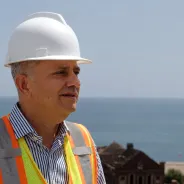
Perched on the roof of their 37-metre high mill, Sonoco’s teams are taking stock of the work they have just completed. The dense network of pipes criss-crossing the ceilings of the seven enormous storeys – like a giant redwood tree planted in a building – is about to begin operations. It will carry out a process of transforming wheat into flour that is much more complex than the idyllic image conjured up by the mill in the popular French novel by Alphonse Daudet. Mark Pritchard, Managing Director of Sonoco Sierra Leone, beaming at the mention of his “baby”, revisits this adventure:
This project represents a major milestone in the industrialisation of Sierra Leone – a state-of-the-art production facility, with an equivalent daily capacity of 9,000 50-kilo bags of flour! It would never have got off the ground without the support of our partners. I would especially like to thank Proparco, which has been with us from the start – not only financially, but also by providing invaluable strategic support, enabling us to go further, faster.
For Sonoco, headquartered in neighbouring Guinea, teamwork has been one of the keys to the success of the project, whose impact goes beyond local production:
In addition to its human and economic impact, this project is helping to achieve one of the country’s major strategic objectives: strengthening food security on a sustainable basis.
“We are very proud to support Sonoco, an agri-food group we have financed to the tune of $23 million,” echoes Sadio Dicko, Proparco’s Regional Director for West Africa, before noting that “this flagship project was part of the FARM initiative, spearheaded by French President Emmanuel Macron. It aims to strengthen food security in priority countries like Sierra Leone.”
For the country’s leaders, the Sonoco mill symbolises above all Sierra Leone’s concrete progress towards enhanced food sovereignty and vital industrial development.
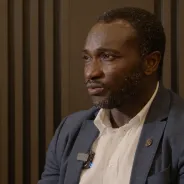
We have three main objectives regarding food security: reducing imports of basic commodities, increasing our exports of cash crops, and addressing nutritional challenges. Witnessing large private companies getting involved in different agricultural value chains – rice, palm oil and flour – is encouraging: they create jobs, ensure a degree of sustainability and reduce our dependence on imports.
These are ambitious objectives that require the involvement of all stakeholders needed to bring large-scale projects to fruition across the country, starting with the mobilisation of the international private sector:
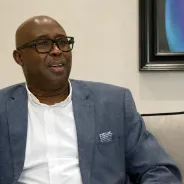
It is difficult to raise the necessary funding for major projects locally so we have to rely on international partners and investors. French companies have a great deal of experience. We appreciate this and we hope to organise more investment conferences between France and Sierra Leone.
Between projects and their completion, the missing link in the chain still needs to be activated, as described by the country’s Vice-President:
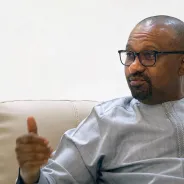
What we need is a bridge to equity and Proparco forms part of that bridge. This can create opportunities for production, food sovereignty, infrastructure and jobs for young people. We can no longer just wait for development aid. We must create opportunities ourselves to attract Western investment: this is what is sustainable and long-lasting.
Our news
Türkiye: Proparco and FMO support the development of Armada Gıda’s agri-food capabilities
Published on October 19, 2026
IDB Invest and Proparco Strengthen Partnership to Mobilize Private Investment in Latin America and the Caribbe...
Published on October 16, 2026
Proparco invests in CarbonFarm to reduce methane emissions from rice farming
Published on October 15, 2026