Share the page
“Our growth warranted accessing the capital markets directly”
Published on
Private Sector & Development #44 - Mobilising capital: for a new financing model
How can we scale up the mobilisation of private capital? While investment needs in developing countries run into trillions of dollars and public resources are no longer sufficient to meet these, the involvement of private investors has become essential.
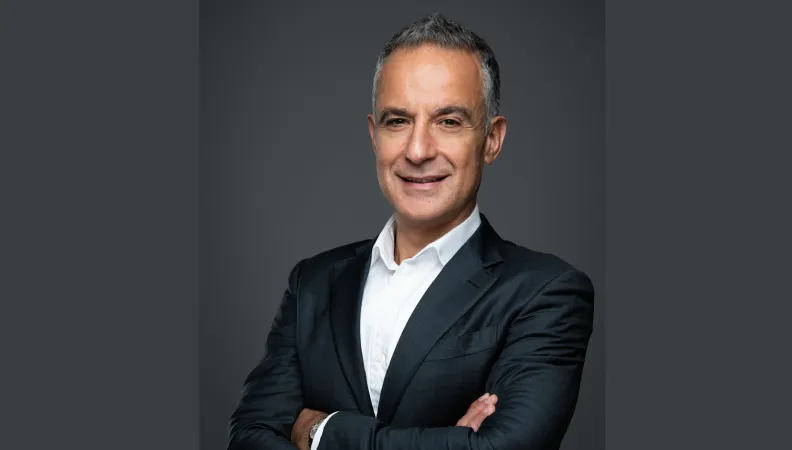
From accessing international bond markets to the emergence of African capital markets, Hassan Jaber, Group Chief Executive Officer of Yas (formerly Axian Telecom), discusses the challenges and opportunities shaping the financing strategies of large companies.
Why was this the right time for Yas Group to enter the international bond markets?
The decision to issue bonds was a natural progression of our financing strategy. We initially financed our projects through local banks, then our acquisitions through pan-African and international banks. Our growth had reached a scale that justified accessing the capital markets directly. This issue enabled us to access a much broader and more diversified investor base than traditional bank financing, including asset managers, pension funds and international investors, mainly in the United States and the United Kingdom. It also offered a number of strategic advantages: a bullet repayment structure, which allows us to repay the principal only at maturity; a fixed rate providing greater visibility over our cost of financing; and more flexible covenants than those of bank loans.
What was the main challenge of this operation?
A bond issue is prepared several months in advance. In our case, much of the work had already been done during our first issue in 2022: building a solid credit story, obtaining ratings from Standard & Poor’s and Fitch, and preparing all the legal, financial and marketing documentation. We were able to capitalise on this experience, on the relationships of trust we had built with investors, and on the processes already in place. We liaised very closely with J.P. Morgan, Standard Chartered and Standard Bank to structure the transaction and select the best market window. However, the main challenge was not to do with the company but with the market environment. The week leading up to the issue was dominated by geopolitical tensions in the Middle East and political uncertainties in the United States. Despite this volatile environment, we managed to identify a favourable window of opportunity to execute the transaction.
After your experience of international markets, are you considering a bond issue in Africa?
We already use local-currency financing from local banks where appropriate. This creates a natural hedge between locally-generated revenue and debt servicing, thereby reducing currency risk. Obviously, in the longer term, we would be interested in a local-currency bond issue on African markets. Recent transactions, such as those carried out on the BRVM or Safaricom’s ESG bond issue in Kenya, show that these markets are gradually maturing. However, several conditions still need to be met: sufficient critical mass, major financing requirements, and a regulatory framework that allows this type of transaction to be carried out under favourable conditions.
Further reading
Bond issues: the keys to a successful transaction
Whereas bond issues were long the preserve of governments and large corporations, they are now becoming a genuine alternative to bank debt for companies in emerging economies. But raising funds on the...
Published on November 24, 2026

Also read
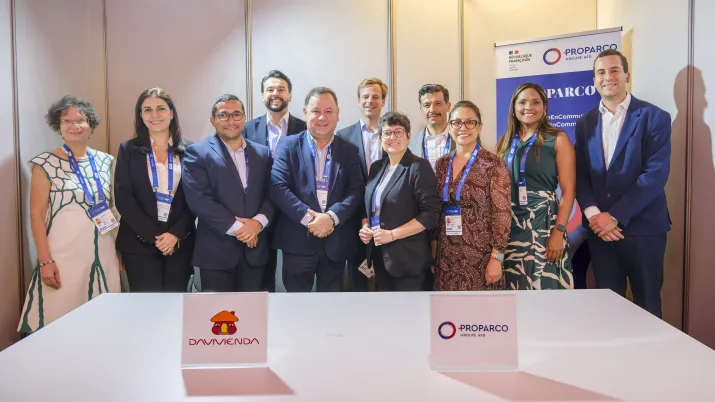
As Colombia faces an unprecedented El Niño episode, Davivienda and Proparco mobilise US$125 million through a...
Published on November 20, 2026
Proparco grants a €75 million loan to QNB Leasing to support Türkiye's energy transition
Published on November 16, 2026