Share the page
Kenya: Proparco invests in Farm to Feed to reduce food loss and strengthen smallholder farmers’ market access
Published on
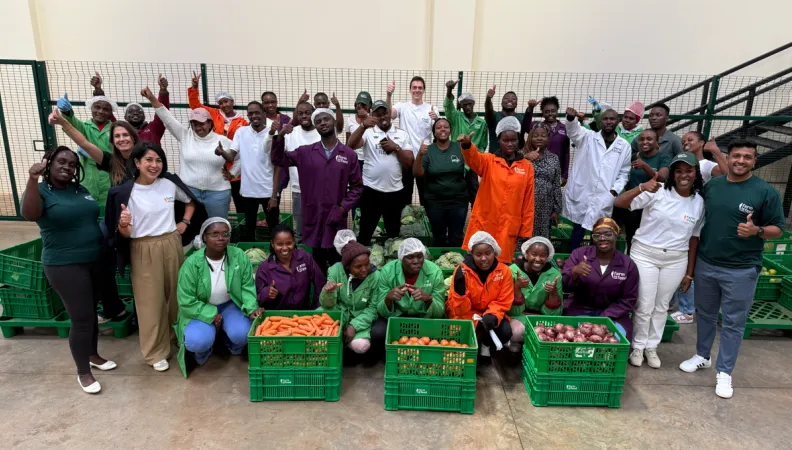
Proparco has invested €150,000 in Farm to Feed, a Kenyan agritech company tackling food loss while increasing incomes and market access for smallholder farmers. Through its technology-enabled platform, Farm to Feed coordinates fragmented agricultural supply with predictable buyer demand, helping farmers commercialise more of what they grow while reducing waste across the food system.
Tackling fragmentation in Kenya’s food system
In sub-Saharan Africa, an estimated 50% of fruits and vegetables are lost before reaching the market. This contributes to lost farmer incomes, significant economic losses across the agricultural sector and unnecessary environmental impacts. Food loss is driven by a highly fragmented and unpredictable food markets as well as lack of reliable input resources for farmers. Farmers often lack sufficient visibility on future demand, access to reliable inputs and information needed to plan production and achieve successful yields. This often leads to overproduction of some crops or inconsistent quality. At the same time, buyers must manage large, fragmented supplier pools and struggle to source the volumes, quality and products reliably. This fragmentation creates inefficiencies throughout the supply chain, with good food going unsold and farmers losing income. Farm to Feed is addressing this problem through a bespoke tech platform purpose-built for the realities of the local ecosystem. The platform coordinates farmers, buyers and internal operations across sourcing, demand forecasting, sales, logistics, warehousing and payments. By forecasting and matching demand with supply, communicating requirements to farmers, providing logistics and rapid payment, Farm to Feed creates a more predictable route to market. The model takes a full-harvest approach, enabling farmers to commercialise a wider diversity of crops and grades. Through “Grade Rescue” and its “Ready to Use” product lines, Farm to Feed creates markets for imperfect and surplus produce while also processing produce to increase convenience and extend shelf life. These activities help farmers generate more value from the harvest they have already produced, while creating products for both domestic and international markets.
Rapid commercial growth and expanding market reach
Farm to Feed has 5,500 registered farmers on the platform and 160+ B2B customers - hotels, schools, hospitals, food processors and institutional feeding programmes. Its technology platform combines a farmer app, enterprise resource planning (ERP) system and customer e-commerce platform, providing the digital backbone to coordinate a fragmented supply chain. The company has grown by more than 100% year-on-year for 3 consecutive years with a Net Promoter Score (NPS) of 92 – and expanding beyond Nairobi into other regions of Kenya.
Creating impact for farmers and the environment
Farm to Feed’s 2025 impact report reported 249% farmer income increase through reliable markets, fair pricing and increased offtake volumes, also reported an 81% reduction in food loss on farms working with the company. By improving coordination between supply and demand, Farm to Feed helps reduce food loss while making better use of the land, water and agricultural inputs already invested in producing food. Through demand forecasting, farmer communication, market coordination and transparent transactions, Farm to Feed helps farmers plan production with greater visibility and receive payment within days rather than waiting weeks.
Founded by women entrepreneurs, built for scale
Farm to Feed was founded in 2021 by three women entrepreneurs, making Proparco’s investment a 2X-labelled investment. Proparco’s investment will enable Farm to Feed to accelerate its growth by strengthening its technology platform, operational capabilities and network of partner farmers. It will also support the expansion of its value-added activities, increasing the share of harvested produce that can be successfully commercialised.