Search results
Technical assistance: the outlook for a strategic tool for development finance
Technical assistance (TA) is the non-commercial support provided by a DFI to develop capacity and effectiveness. It complements funding to maximise development impact, contributing to achieving the Un...
News
Published on

MedTrucks: smart mapping comes to the aid of medical deserts
Between Morocco and France, the CEO of MedTrucks, Anass El Hilal, has only one obsession: bringing healthcare services to vulnerable people. To achieve this, he uses data to map medical deserts and op...
News
Published on

AEF II CE
The AEF II Clean Energy Fund supports renewable energy and energy efficiency projects – mainly in Chile, Peru and Colombia. It contributes to securing the electricity supply in the region.
Project
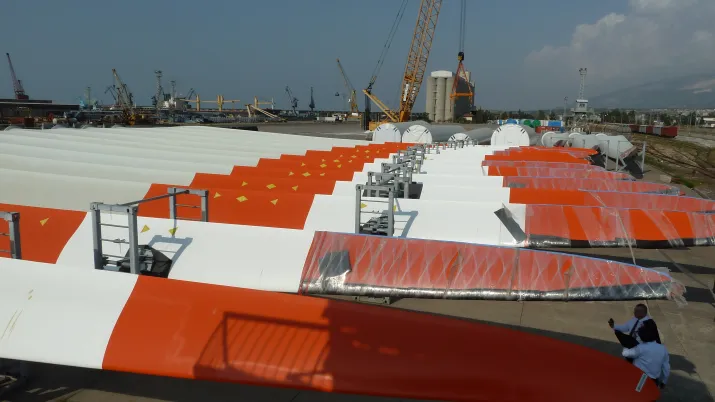
Index Up40: the network of French start-ups focusing on African markets
Launched in 2016 by Medef International, Index Up40 brings together French start-ups operating in Africa. It has become a key network that facilitates synergies and supports French entrepreneurship on...
News
Published on

Ange Frédérick Balma highlights LiFi on both sides of the Mediterranean
At the head of Lifi-Led start-ups in Abidjan and Sinilux in Aix-en-Provence, the Ivorian entrepreneur Ange Frédérick Balma uses LiFi technology to market light as a wireless communication service. In...
News
Published on

How the Mauritian CIEL Group is broadening its African horizon
CIEL Group operates in a number of sectors, including financial services, health and textiles, and is one of the leading economic players in Mauritius. This performance is linked to its activities in...
News
Published on

“The African continent is beginning to create an enabling environment for technology innovation to thrive” – B...
Nigeria's Co-creation Hub (CcHub) is one of the county's leading technology, innovation and preincubation spaces. It is a place for technologists, entrepreneurs, the Government, tech companies, and im...
News
Published on

Entrepreneurs from the diaspora are ramping up innovation-led development in Africa
The African diaspora is a unique resource that must be harnessed. Aside from channelling financial flows back to their countries of origin, thanks to experience acquired abroad and familiarity with th...
News
Published on

Overview of new solutions to support small business
In Africa, SMEs account for 90% of private companies and provide jobs for 70% of the rural population. They play a key role in job creation and in the continent’s economic development, however, when...
News
Published on
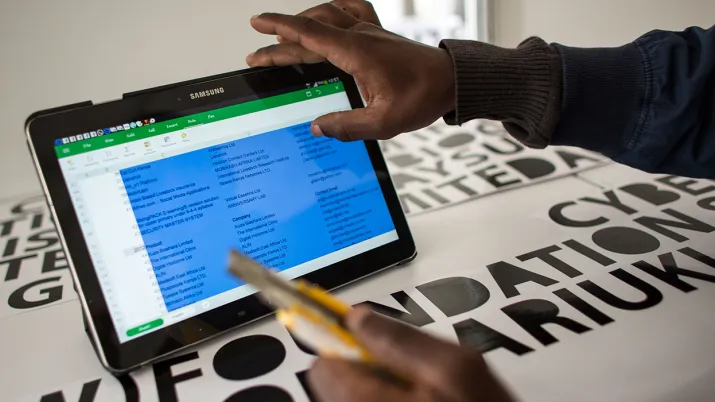
Addressing the challenge of SME Finance by optimizing risk management
African SMEs have the potential to provide jobs for working-age youth. Yet there are key impediments – access, risk, regulation and acumen – to them receiving financing. Addressing the perceived high...
News
Published on

How to successfully build women’s entrepreneurship
Women’s entrepreneurship boosts Africa’s economy. Assisting it means supporting growth and employment. Yet there are many barriers to its development. While some are due to social or cultural factors...
News
Published on

From required scale to scaling up
Jean-Michel Severino, Chairman of Investisseurs & Partenaires (I&P), believes that the priority remains investing in support of the formal African enterprise sector, which is best placed to resolve th...
News
Published on
Protected area management: how can the private sector play a part?
We are depleting our natural capital, which sustains lives and economies. A cost-effective way to conserve natural capital, and to restore our natural balance sheet to its proper order is conserving i...
News
Published on

AEGEA
By supporting the investment program of Aegea Saneamento e Participações, Proparco is contributing to the development of drinking water production, distribution and treatment in four Brazilian municip...
Project
Collaborating to accelerate investment in climate adaptation and resilience
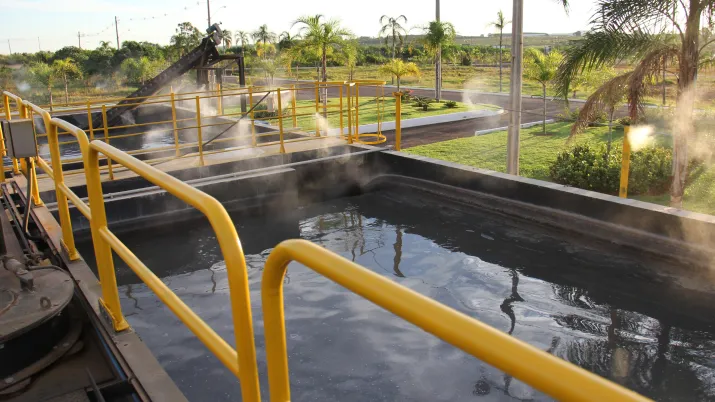
While there is an urgent need to step up action on climate adaptation, the action is not in step with the need. This is especially true of the required financing, particularly from the private sector....
News
Published on

How cities can focus their climate adaptation and resilience actions
More than half of the world’s population lives in cities – and all are at risk from increasing climate change impacts ( floods, storms, extreme temperatures, among others) due to warming at alarming l...
News
Published on

Helping financial institutions to scale up climate change adaptation for increased resilience
The financing of adaptation measures has not become widespread up to now due to a number of obstacles. These include – but are not limited to – insufficient harmonization of practices and terminology,...
News
Published on

Investing in nature for water security: the power of collaboration
Around the world, the impacts of climate change are increasingly being felt and have become impossible to ignore. Stories of increased drought, more intense storms, and changing rainfall patterns are...
News
Published on

Private sector action in analyzing climate risk data
Climate change is part of our daily lives. It must no longer be considered as a problem of the future but as a current challenge: it is essential to adapt our societies and systems. Private sector pla...
News
Published on

Adenia IV
The Adenia IV fund mainly targets SMEs in the Indian Ocean and West Africa. It helps them go regional, diversify their products, and strengthen their organizational and managerial potential.
Project