Share the page
BasiGo is reshaping urban transport in Africa
Published on
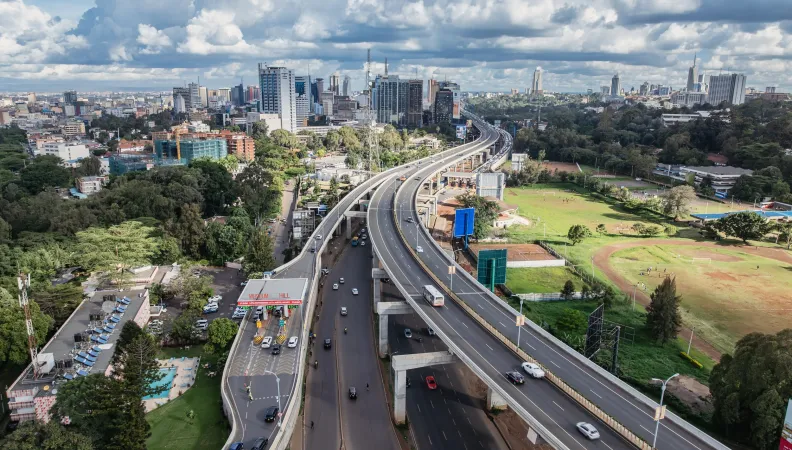
In Kenya, BasiGo is driving the transition to cleaner transport. Its electric buses cut emissions and support jobs and local manufacturing. This on-the-ground report takes you inside the Nairobi-based start-up, in which Proparco invested in 2025.
It is 3 p.m. in Nairobi’s Central Business District. Like every day, commuters move through the vibrant streets, where traffic is animated by the colorful matatus, Kenya’s iconic buses covered in graffiti and slogans. Among them, a quieter presence is beginning to stand out. “The absence of noise makes the journey much more pleasant, especially when you commute regularly. I see electric buses as a positive evolution: they bring more comfort, more safety and a better experience for passengers,” says a commuter. These are BasiGo’s electric buses. Founded in 2021, the Kenyan start-up is emerging as a key player in electric mobility, offering locally assembled buses to transport operators and contributing to a broader shift toward cleaner and more resilient urban transport systems.
BasiGo: the future of clean, electric public transport in Africa
Discover our Business for Change report dedicated to BasiGo. An immersive look at the transition toward more sustainable transport in Nairobi.
From daily realities to a new vision for urban transport
Public transport is at the heart of everyday life in Kenya with around half of the population relying on it, especially in cities like Nairobi. BasiGo’s model was built in response to a very visible challenge: urban pollution. “During Covid, when transport stopped, the air cleared and you could suddenly see Mount Kenya from Nairobi. It showed how much of the pollution comes from public transport,” recalls Jit Bhattacharya, co-founder and CEO of BasiGo. In a city where diesel buses are a major source of emissions, electrifying transport is not only an environmental necessity, but also an opportunity to transform a system that millions depend on every day.
Jit Bhattacharya: “The reality of climate change demands a new vision for public transport”
In this Voices for Change video, Jit Bhattacharya, co-founder and CEO of BasiGo, shares the start-up’s ambition to accelerate the development of electric mobility and transform public transport across Africa.
A player working within the existing system
BasiGo’s model is rooted in the realities of the Kenyan transport system. “What is driving BasiGo today is that the solution is not only impactful, it is also commercially viable for operators,” says Moses Nderitu, Managing Director for Kenya at BasiGo. Rather than disrupting the existing system, the company works within it. “BasiGo is not coming to change how the system operates. We provide electric buses and take care of charging, maintenance and technical support, allowing operators to focus entirely on their day-to-day activities.” This approach makes electric buses both accessible and attractive for transport operators, accelerating their adoption.
“During the night shift, my job is to make sure every bus is ready to go back on the road the next day. When they arrive, we speak with the drivers, check how the day went, then we clean them and move them to charging. Each bus is charged once overnight, which is enough to keep it running throughout the entire day. It takes about two hours, and everything happens overnight so that by early morning, the buses are fully ready. At our station, we handle around 17 buses, so every step matters. I’m proud of what we do, because even if it happens behind the scenes, we make sure that everything runs smoothly.”
- From the night bus depot in Nairobi

Leveraging Africa’s renewable energy potential
"Air pollution is a major issue in Kenya with around 5,000 premature deaths each year linked to emissions, particularly from diesel vehicles,” explains Joy Mukiri, Head of Environmental, Social and Governance (ESG) at BasiGo. “The people most exposed are often those who rely on public transport every day, including workers and children.” By replacing diesel buses with electric vehicles, BasiGo directly addresses this issue. Electric buses produce zero tailpipe emissions, contributing to cleaner air and healthier urban environments. “Replacing one diesel bus with an electric bus avoids around 50 tonnes of CO₂ emissions and 120,000 litres of diesel every year,” she adds.
While addressing pollution challenges, BasiGo also builds on one of Africa’s major strengths: its renewable energy resources. In Kenya, where electricity increasingly relies on renewable sources, electrifying transport makes the shift even more impactful. It allows cities to rely on locally produced energy while reducing dependence on imported fossil fuels.
“I’ve been driving in Nairobi for nearly 30 years, and switching to electric buses has completely changed the experience. The ride is smoother, quieter and much more comfortable, for me and for passengers. You can really see the difference at the bus stops. People often wait for the electric bus, because it’s calm, clean and there’s no noise or chaos inside. They tell us they enjoy the journey more. It’s also easier to drive and more reliable. For me, this is a real step forward in the quality of public transport, and I can feel how much passengers appreciate it every day.”
- From the CBD bus stop in Nairobi

Building local expertise and creating jobs
BasiGo is also contributing to a broader transformation of the local economy by building industrial capacity and developing skills. “We are assembling buses and vans locally, and at the same time training the next generation of technicians who will maintain these vehicles throughout their lifetime. That is a key part of building a long-term electric mobility ecosystem in Africa,” explains Moses Nderitu.
This local anchoring creates a virtuous circle of job creation, skills development and industrial growth. “BasiGo creates direct jobs across different functions in Kenya and Rwanda. We also assemble our buses locally, which creates local manufacturing jobs. More broadly, every bus on the road supports employment across the value chain. One bus can represent around 12 jobs,” adds Joy Mukiri.
“My role is to ensure that every bus moves through the production line on schedule, with the right teams, tools and parts in place. Each day, we track progress and oversee every stage, from chassis and body assembly to final checks, making sure everything runs smoothly and safely. We’ve made significant progress in improving efficiency, reducing production time from 26 days to around 18 days per bus. Beyond performance, assembling BasiGo buses locally in Kenya is also creating jobs and building skills: around 70 people work along the production line. We also train young graduates through our Manufacturing Development Program, and source some components locally, helping strengthen the wider ecosystem. I started here as an intern, and today I’m proud to be part of this journey. Seeing the buses on the road and knowing I helped build them is incredibly rewarding. For me, this is about more than production, it’s about shaping the future of transport!”
- From the bus assembly center in Thika

Driving the future of electric mobility
Already present in Kenya and Rwanda, BasiGo is now looking beyond. “We are beginning to see growing demand from across the continent. We receive interest from many African countries, from Zambia to Ghana, Nigeria and South Africa,” says Moses Nderitu. The company has set ambitious goals, including its “Road to1000” campaign, which aims to deploy 1,000 vehicles within the next three years. It has also built the largest network of DC fast-charging sites in the region, with 11 stations in Kenya.
This expansion is supported by long-term financing partnerships. “Institutions such as Proparco have been essential in helping us raise the capital and debt we needed to grow. These partners have played a critical role, not only in scaling our operations, but also in providing the kind of patient, long-term financing that allows us to deliver vehicles at an affordable cost to operators.” At the same time, local financial institutions are developing a greater appetite for financing transport operators, reflecting a dynamic that is helping to build confidence among investors and strengthen the local financing ecosystem.
This is what makes this moment so pivotal. In simple terms, the ambition is clear: “BasiGo reduces emissions by replacing diesel buses with electric buses. But beyond that, it is about creating cleaner air, improving daily life, supporting jobs, and building a transport system that is better for people, for communities and for the future,” concludes Jit Bhattacharya.
BasiGo Key figures
- 134 buses deployed across Kenya and Rwanda
- 9 million kilometres driven
- 12 million passengers carried
To go further
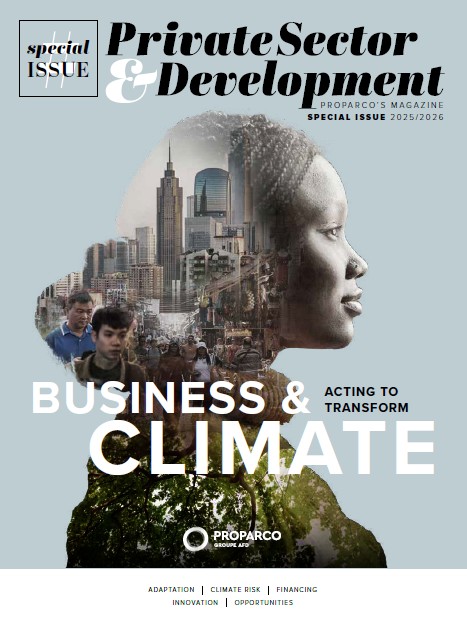
Private Sector & Development - Business & Climate: Acting to transform
Proparco has published a new edition of its Private Sector & Development magazine, focusing on the strategic role of the private sector and financial institutions in tackling the climate emergency.
Published on November 4, 2025
Our news
Türkiye: Proparco and FMO support the development of Armada Gıda’s agri-food capabilities
Published on October 19, 2026

IDB Invest and Proparco Strengthen Partnership to Mobilize Private Investment in Latin America and the Caribbe...
Published on October 16, 2026
"A Close and Innovative Relationship with BOAD"
Published on October 15, 2026